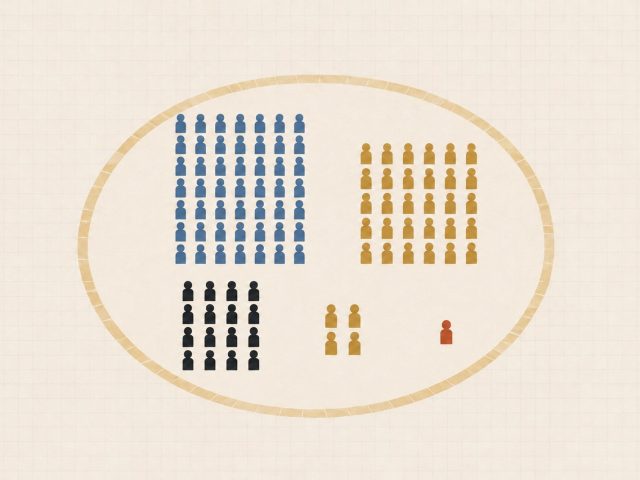
Snap your fingers. By the time you do, about four babies have been born somewhere on Earth. About two people have died.
That happens again in the next second, and the next. It never pauses for holidays, wars or lunch. Let’s turn that endless drip into numbers you can hold.
One second, one day, one year
The UN estimates that 132.4 million babies are born worldwide in 2025 and 63.1 million people die (UN WPP, 2024 revision). A year has 31,536,000 seconds, so the math is simple: 132.4 million divided by 31.5 million is about 4.2 births every second. For deaths, 63.1 million divided by 31.5 million is about 2.0.
| 2025 (UN estimate) | Births | Deaths | Net gain |
|---|---|---|---|
| Per second | 4.2 | 2.0 | 2.2 |
| Per minute | 252 | 120 | 132 |
| Per day | about 362,700 | about 173,000 | about 189,800 |
| Per year | 132.4 million | 63.1 million | 69.3 million |
Read this sentence slowly, and about 21 babies have arrived and 10 people have died.
Putting it in human terms
In the time it takes to boil an egg, about 10 minutes, roughly 2,500 babies are born and roughly 1,200 people die. In a single hour, the world sees about 15,100 births and 7,200 deaths, for a net gain of about 7,900 people.
Those births are not spread evenly. Asia and Africa hold about 78% of the world’s people in 2025 but account for about 85% of its births. Africa alone has about 19% of the population and about 36% of the births (UN WPP, 2024). So of the four babies born each second, roughly three arrive in Asia or Africa.
The gap is shrinking
The world gets bigger every second, but more slowly than it used to. In 1990 the net gain was about 2.97 people per second, or roughly 257,000 a day. In 2025 it is 2.2 per second. That is a drop of about 26% in the yearly gain, from 93.7 million to 69.3 million people (UN WPP, 2024).
The reason is fertility. In 1990 the average woman had about 3.3 children. In 2025 it is about 2.2 (UN WPP, 2024). Replacement level, the number that keeps a population steady, is about 2.1. More than half of all countries are already below it.
Every second, the world gains about two more people than it loses.
thedigitbrew.com, from UN WPP 2024 data (our own line, not a quotation)
Where the gap is headed
| Year | Births per second | Deaths per second | Net gain per second | Children per woman |
|---|---|---|---|---|
| 1990 | 4.5 | 1.6 | 3.0 | 3.31 |
| 2025 | 4.2 | 2.0 | 2.2 | 2.24 |
| 2050 (projection) | 4.2 | 2.9 | 1.3 | 2.10 |
| 2080 (projection) | 3.8 | 3.7 | 0.1 | 1.92 |
In the UN’s medium projection, deaths overtake births around 2084. That is when the world’s population peaks, at about 10.3 billion, before it starts to shrink slowly.
The twist: births are not collapsing
You might think the gap is closing because fewer babies are being born. That is only part of the story. World births peaked at about 146 million in 2012 and have slipped about 9% since, to 132 million. They have been nearly flat since 2023.
The bigger change is on the other side of the ledger. Deaths rose from about 49.8 million in 1990 to 63.1 million in 2025, about 27% more. People are living longer, and there are many more older people. Life expectancy at birth is about 73.5 years in 2025, up from about 64 in 1990 (UN WPP, 2024). By 2050 the UN projects 91.9 million deaths a year, or 2.9 per second.
So the gap is shrinking from both ends: slightly fewer births, many more deaths.
How sure are these numbers?
Not perfectly. Many countries do not register every birth and death, so global totals are modeled estimates. The UN’s data are estimates up to 2023 and projections after that, so the 2025 figures are a best guess. Other groups, such as the US Census Bureau, publish their own world estimates built on different assumptions. Treat “4.2 per second” as a good rule of thumb, not a precise count.
It also helps to remember that “per second” is an average. A real second does not deliver 4.2 babies; it delivers a bit more than four on average, with births bunching and thinning across the day and the year. The averages are still the best way to see the big picture.
The world still grows by about 190,000 people every day, but that engine is slowing, and one day it will stop.
Sources
- UN DESA Population Division, “World Population Prospects 2024”, Demographic Indicators (Medium variant: births, deaths, natural change, total fertility rate, life expectancy), 2024. link
- UN DESA, “World Population Prospects 2024: Summary of Results”, 2024. link
- UN, “UN projects world population to peak within this century”, press release, July 2024. link